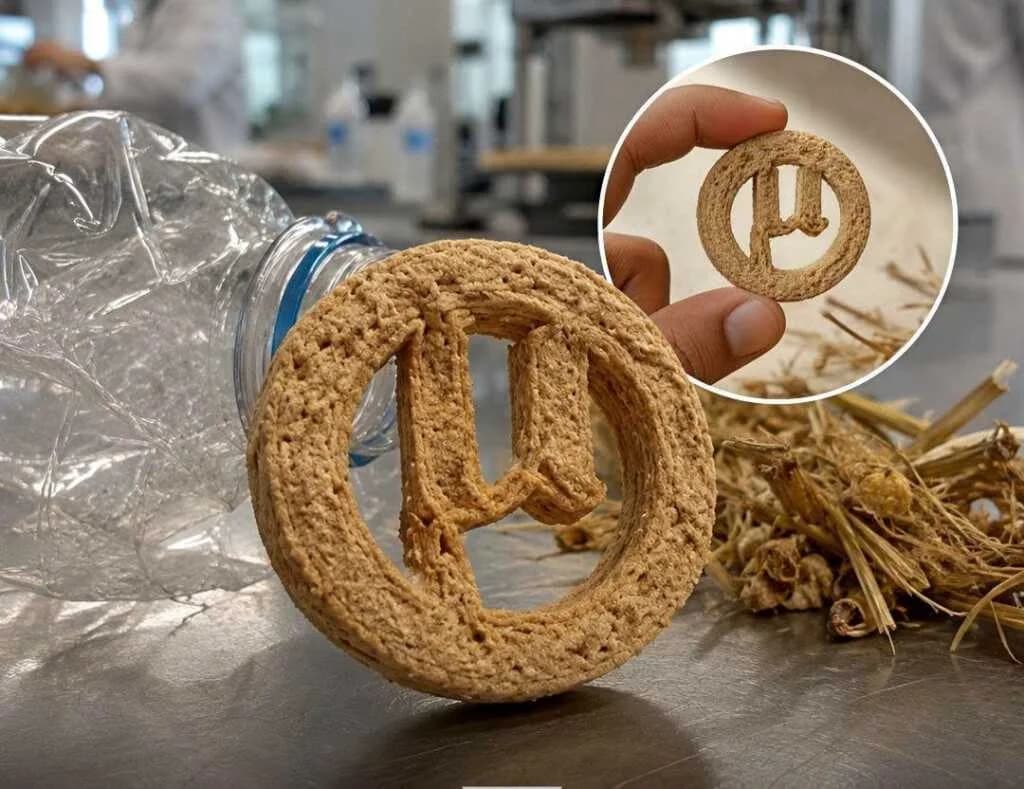
Is it believable that plastic bottle waste could be transformed into food? Now, scientists at Southern Illinois University Carbondale have successfully created samples of space-edible cookies using plastic and agricultural waste materials.
The project, named µBites, was developed through NASA's Deep Space Food Challenge with the aim of enabling food production in resource-scarce long-distance space exploration missions.
The process of creating these cookies is quite remarkable. Rather than simply mixing in plastic as-is, researchers first blend PET plastic—commonly used in water bottles—with agricultural byproducts. They then use water, oxygen, heat, and pressure to decompose these waste materials.
Subsequently, specially engineered yeast is used to convert these components into edible substances containing protein and other nutrients.
The resulting ingredients are then mixed with fiber, carbohydrates, and sugars, and shaped into cookies using 3D printing technology.
However, these cookies currently exist only as research-phase samples and have not yet reached the stage where they can be purchased and consumed in the market. Scientists continue to improve the cookies' taste, appearance, and nutritional value.
This innovative concept represents a beacon of hope for the future, enabling astronauts traveling to distant locations like the Moon and Mars to produce food for survival from waste materials.
Ref: Technology Innovation